
By Dr. James Stapleton
CEO, Codefi Foundation on Rural Innovation
For the past year, nearly every conversation I have had with an employer, an economic developer, or a public official has circled the same two anxieties. The first: we cannot find the workers. The second: what is artificial intelligence going to do to the workers we have? They are almost always treated as separate worries — a staffing problem over here, a technology problem over there. The argument of this essay is that they are one story. That the story, read correctly, is the best economic news this state has had in a generation. And that the reading only pays off for the regions that act on it while the window is open.
Make Missouri AI-Ready is Codefi's statewide initiative to make sure Missouri is one of them. Pieces of the case have appeared elsewhere — on panels, in regional publications, in the design of our programs. This is the whole argument in one place: four claims, each building on the last, and the conclusion they force.
1. The shortage is structural — you cannot hire your way out
Everything begins with a premise most employers have already learned the hard way: the workers are not coming. Not because of a downturn that will pass, but because of arithmetic that will not. For decades, American birth rates have run below the level needed to replace the workforce, while the largest generation in our history has moved into retirement. The working-age population is no longer growing fast enough to backfill the roles the economy creates, let alone the roles left open when someone leaves. Demographics do not negotiate. The babies who would have entered the workforce in 2030 were not born.
In rural Missouri, the national trend arrives with a regional multiplier. Young people leave for the metros and do not always return. There is no deep bench of nearby talent when a position opens. A hospital in Cape Girardeau or a manufacturer in the Bootheel cannot simply widen the search radius and out-bid for scarce workers the way a firm in a major metro can. For many of our employers, the pool they are fishing in is the pool they already employ.
And the shortage is really two shortages stacked on top of each other: not enough people entering the labor force to replace those leaving it, and not enough of the right skills in the people already on the job — because the capabilities our industries need are now changing faster than any traditional training pipeline can refresh them. You feel the first shortage when you cannot fill a posting. You feel the second when the person you did hire needs skills that did not exist when they were trained.
Follow the premise to its conclusion and only one lever remains. If you cannot add workers, you must raise the productivity of the workers you have — not by asking people to do more with less, which is how regions burn out the workforce they can least afford to lose, but by giving them tools that multiply what each person's training makes them uniquely able to do. For a metro employer, incumbent-worker investment is one strategy among several. For rural Missouri, it is the only move on the board.

2. The inflection — the tools finally reached the workers
For most of my career, that lever was more aspiration than plan. The technologies that delivered real productivity gains required scarce technical specialists to operate — data scientists, software engineers, exactly the workers a labor-short region cannot recruit. The lever existed; the hands to pull it did not.
That is what has changed, and only in the last few years. Artificial intelligence became usable by ordinary, non-technical workers. A nurse, a billing clerk, a scheduler, an operations manager can now direct a genuinely capable system in plain language, without writing a line of code. The capability moved from the specialist to the practitioner — from the people a region like ours cannot hire to the people already on its payroll.
Picture the two trend lines. One is the supply of workers, bending downward for decades — slowly, predictably, irreversibly. The other is the accessibility of serious productivity technology, flat for just as long, then bending sharply upward in the space of three years. Those two curves spent half a century having nothing to do with each other. They have now crossed. The first created a need with no way to meet it; the second is the means, arriving at the precise moment the shortage made it indispensable.
In Missouri, we know what it is called when two great currents meet and everything downstream changes. I have taken to calling this moment the Confluence — the collision of a labor market that stopped producing enough workers and a technology that finally reaches the workers we already have. Confluences are not tranquil. But they are where the power is, and they reward the communities built where the currents meet. The Confluence is the organizing fact of this decade for workforce and economic development, and windows like it do not stay open indefinitely. The regions that move while it is open will set the terms. The regions that wait will inherit them.

3. The stakes — readiness decides where the future lands
Why urgency, and not merely interest? Because investment follows capability. When a company decides where to expand, where to place the high-wage roles, where to build the next facility, it goes where the workforce can absorb the work — and increasingly, that means where the workforce is AI-capable. Missouri is already attracting serious AI-related infrastructure investment. The open question is whether Missourians capture the value of that investment or merely host it.
A region that can demonstrate a workforce fluent in applied AI does not just retain the employers it has. It becomes the kind of place that shows up on the list when location decisions get made. The wages, the investment, the relevance — these flow toward readiness. That is the difference between playing offense and managing decline, and it is the difference this initiative is built to secure. The workers and regions that become capable with these tools will command them. The ones that wait will watch the opportunity settle somewhere else.

The worry, answered
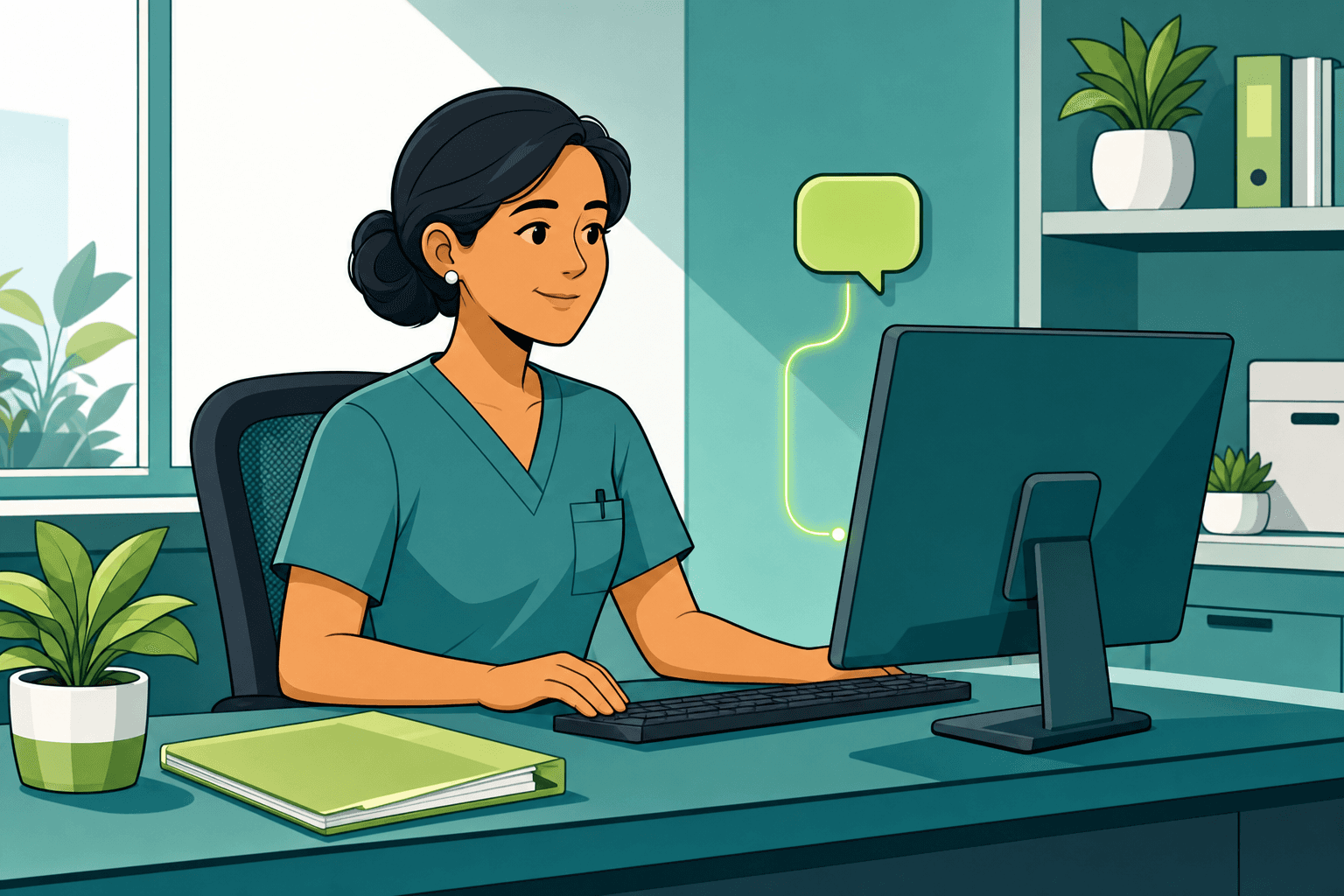
Whenever AI enters a conversation about work, the same question follows: is this how the jobs disappear? In a labor-short economy, the worry has the logic exactly backward. You cannot be replaced by AI when there is no one to replace you with. We are not staring at a surplus of workers that technology will thin out; we are staring at a shortage that the work itself keeps outrunning. Here, AI does not displace a worker — it fills the gap in an unfilled position already left open. In healthcare especially, where demand for care is rising for the same demographic reasons the workforce is shrinking, the technology augments the people we have because there is simply too much that needs doing and too few hands to do it. The worker who learns to direct these tools does not become replaceable. She becomes the person her department cannot function without.
4. The access imperative — this must reach all of Missouri
If readiness decides where the future lands, then readiness cannot be a metro privilege. The stakes in the previous section apply with the most force to the communities with the least margin — the rural and mid-market regions where the labor shortage bites hardest and where, historically, transformative technology arrives last. Codefi has spent more than a decade on the proposition that talent is distributed evenly across Missouri and opportunity is not. The Confluence is the moment that proposition matters most: for the first time, the enabling technology does not require the infrastructure, the specialist labor pool, or the proximity that kept prior waves of opportunity concentrated in the metros. This wave can land everywhere — if the training reaches everywhere.
Reaching everywhere is not a solo act, and it is not a rural-versus-metro contest. Our partners in Columbia, St. Louis, and Kansas City are collaborators in this work, not competitors for it — metro institutions have their own reach problem, because they cannot serve hundreds of scattered communities one relationship at a time. That is why these programs are delivered in collaboration with local and regional partners across the state — community institutions, colleges, and economic development organizations, including the Show-Me Network we operate with the efactory at Missouri State University — so capability travels outward and every Missouri community is connected to the wider innovation economy.
The policy environment is aligned behind this work in the right order: state first. Governor Kehoe's Executive Order 26-02 set Missouri's direction on artificial intelligence, and Missouri's workforce system — second in the nation for completed registered apprenticeships — gives that direction real delivery infrastructure. Behind the state stands the Administration's Make America AI-Ready initiative and the federal AI workforce policy architecture, which Make Missouri AI-Ready is deliberately built to advance. That alignment is already drawing competitive investment toward Missouri, and specific projects will be announced as funding is secured. The pattern matters: this is not a program looking for justification. It is a state strategy, nationally aligned, competing for and winning the resources to execute.
What the argument demands — and what we built
Take the four claims together and they dictate the solution's design before a single course is written. If the existing workforce is the asset, the training must work on the asset's terms: delivered on the job, without asking anyone to step out of a workforce that can spare no one. Moving at the speed the technology moves, not the speed of a catalog cycle. Validated by employers against real workflows, not taught in the abstract. Credentialed, so the worker's new capability is portable and provable. And delivered where people already live — all of Missouri, not the metros plus a waiting list.
That is precisely what we built. Working with Saint Francis Healthcare System — the largest health system between St. Louis and Memphis, serving more than 715,000 people across a five-state region — and the Missouri Hospital Association, Codefi created the Healthcare AI Integration Specialist Registered Apprenticeship, formally registered by the U.S. Department of Labor in May 2026. It is among the first registered apprenticeships in the nation for an AI integration occupation, and it may be the only one anywhere designed, from the first hour of instruction, inside the real workflows of healthcare: clinical documentation, electronic health records, the privacy rules that govern patient data. Our people do not learn generic AI and then try to apply it to a hospital. They learn AI integration as healthcare workers, in healthcare, from day one.
The apprenticeship is anchored by a three-tier curriculum that serves the whole workforce, not only apprentices. Tier one builds AI literacy — what these tools are, what they cannot do, and how to use them safely in a regulated environment. Tier two builds applied proficiency — using AI inside real documentation, communication, and workflow tasks. Tier three teaches building — small automations that solve problems specific to a worker's own department. Registered apprentices complete the full journey and earn a nationally recognized credential on the job, drawing a paycheck the entire time. Incumbent workers who are not apprentices train in the same curriculum, with articulation pathways into the apprenticeship when they are ready. Grant-funded scholarship access keeps the door open to eligible Missouri workers regardless of what their employer can spend.
Picture what that means for one person: a staff member in health information or patient access, good at her job, most of her day spent pulling records, entering data, routing documentation. She does not quit to go back to school — she trains where she works, on payroll, and moves from a manual role to a higher-value one. She becomes the person in her department who can make AI work, with the job security and wage path that follow. Her employer keeps a veteran it could not have replaced and multiplies what she can do. Repeat that across a hospital, a region, a state, and you have the answer the shortage has been demanding. In the pilot's first eighteen-county footprint alone, we project 150+ workers trained, 65+ industry credentials, 30+ apprenticeship completions, 30+ new jobs created, and 60+ jobs retained — and healthcare is the beginning, not the boundary. Through the industry-agnostic AI Integration Specialist program, the same pathway is open to Missouri employers in any industry today — with manufacturing and agriculture, the other pillars of Missouri's regional economies, next in line for the same deep industry contextualization healthcare received.
The window
Every claim in this essay is durable except one. The shortage will still be structural in five years. The stakes will still be real. The access imperative will not expire. But the advantage of moving first is available only now, at the Confluence itself — while most regions are still debating and the capability gap between the prepared and the unprepared is still being set. Missouri holds a genuine head start: a first-in-nation apprenticeship, committed employers, collaborating partners in every region, a state policy framework pointing the same direction, and a decade of place-based infrastructure built for exactly this moment.
So this is the invitation. If you employ Missourians, your next capability is already on your payroll — let us help you develop it. If you work in Missouri, the tools that will define the next decade of your field can be yours without stepping away from your job or your paycheck. If you lead a community, a college, or an institution anywhere in this state, this work has a place for you. The currents have met. Everything downstream is about to change. Make Missouri AI-Ready is how we make sure it changes in Missouri's favor.
Learn fast. Build right. Gain traction.
Relevant Links
Make MO AI Ready: https://codefiworks.com/missouri-initiatives/make-mo-ai-ready
Codefi Foundation: https://codefiworks.com
Codefi AI Skills programs: https://codefiworks.com/ai-training