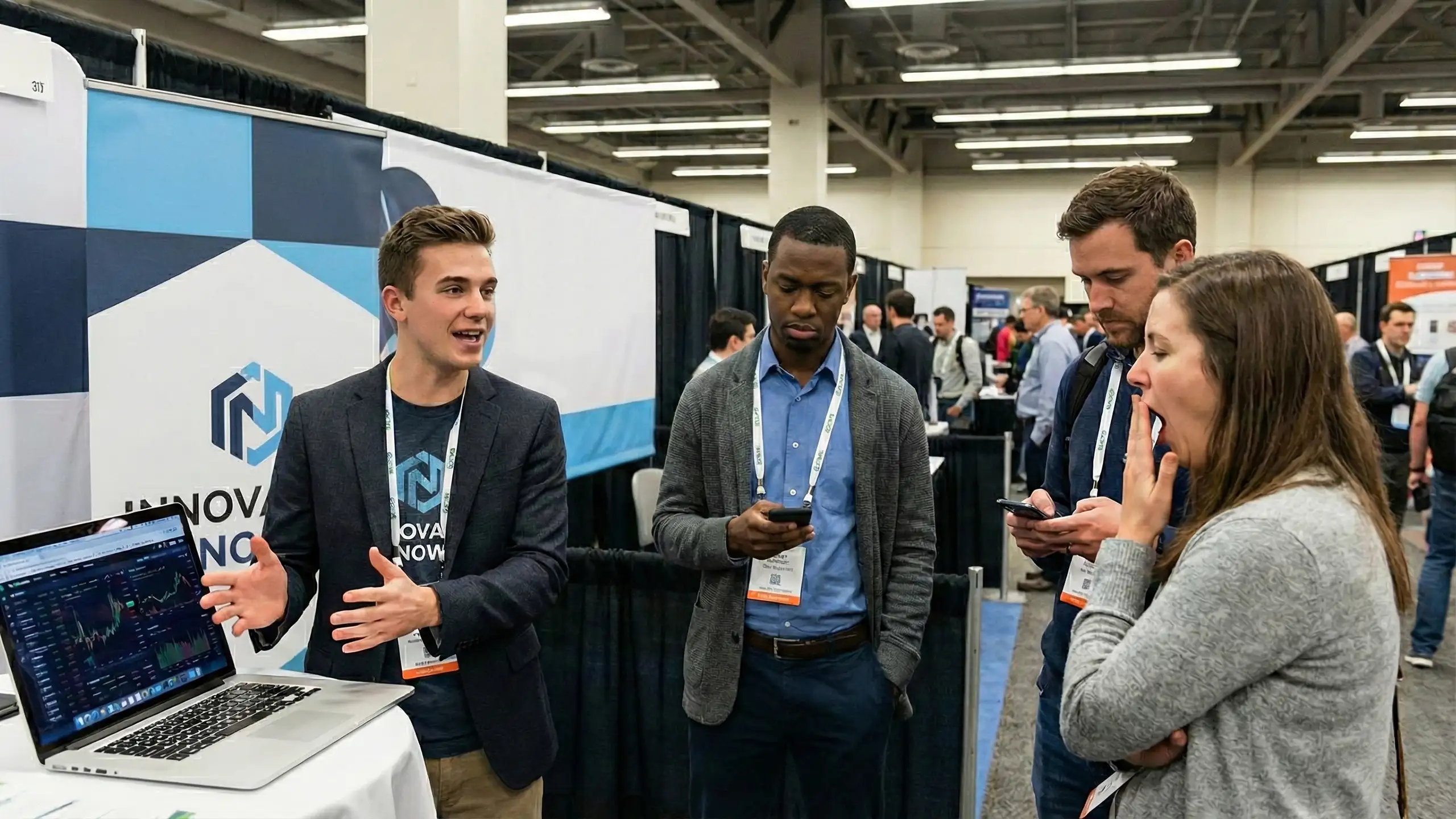
We were talking with a founder recently who is three years into his startup journey. Smart guy. Technical chops. He could build anything. Before and as he launched he spent a significant amount of time consuming every startup book and podcast he could find. He feels confident that he invested over $1,000 in books, courses, and time listening to podcasts.
"Looking back," he told us, "I would have paid anything for what you're building now. I spent all that money on content, but only retained maybe 20% of it. And I still built the wrong things first."
His story isn't unique. It's the norm.
The Stat Everyone Quotes (But Nobody Fixes)
According to CB Insights, a tech market intelligence platform that tracks venture capital activity 42% of startups fail because of "no market need." Not technology problems. Not hiring issues. Not even running out of money, exactly.
They fail because they build something nobody wants.
Read that again. Four out of ten startups spend months or years building something the market doesn't need. Despite all our modern tools, frameworks, and advice, nearly half of us are still getting this fundamental thing wrong.

The Speed Paradox
Here's where it gets really interesting—and a little terrifying.
We can build faster now than at any point in history. AI coding tools like Cursor, Replit, and v0 let you go from idea to working prototype in days instead of months. We have watched founders "vibe code" functional MVPs over a weekend.
This should be incredible news, right?
But here's the paradox: Building faster only matters if you're building the right thing.
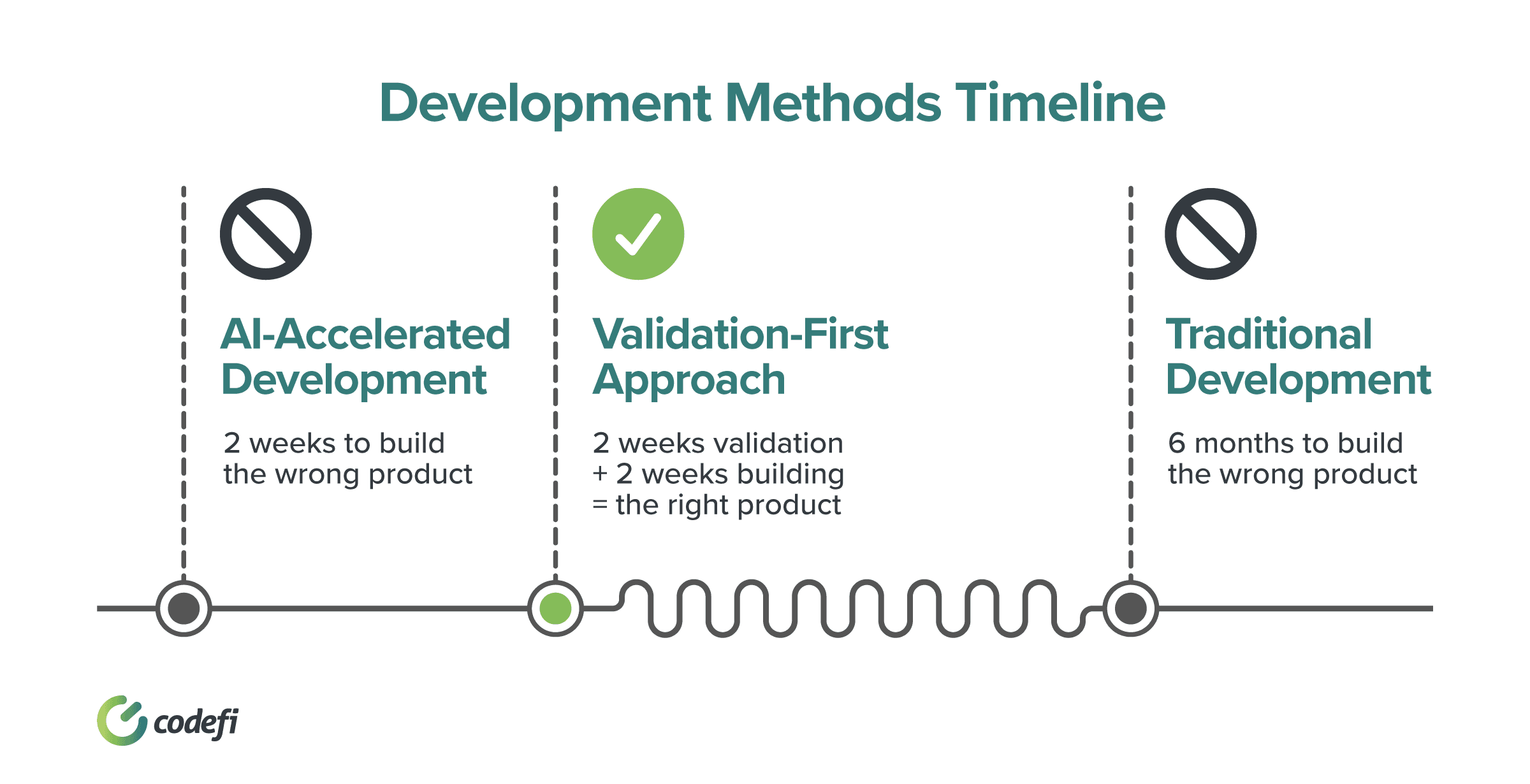
If you build the wrong product in two weeks instead of six months, you haven't saved time. You've just failed faster. And the psychological trap is even worse—when you can build something quickly, there's a massive temptation to skip validation and "just build it to see."
The Gap Nobody Talks About
Most founders know they should validate their ideas. They understand customer discovery. Many even do interviews.
But here's what typically happens in practice:
Schedule interviews
Take notes
Try to synthesize patterns (spreadsheets, late nights, lots of coffee)
Sketch some ideas (Miro, paper napkins)
Figure out what to build (confusion, decision paralysis)
Start coding (hoping you got it right)
At each handoff point, something gets lost. Insights don't make it from interview notes to product requirements. Patterns from conversation three don't connect to conversation seven. The gap between "I talked to customers" and "I know what to build" is where most validation efforts die.
The gap between "I talked to customers" and "I know what to build AND who will pay for it" is where most validation efforts die.
The tools exist for each piece. But nothing connects them into a systematic process that validates both the problem intensity AND the market opportunity.

What Makes This Particularly Hard in Rural Communities
If you're building a startup outside a major tech hub, this validation challenge gets even harder.
In San Francisco or Austin, you can walk into a coffee shop and accidentally run into potential customers and advisors who've built similar products. But in Joplin or Cape Girardeau or Rolla? You're often the only person in your zip code working on your specific problem. You have to be more systematic, more intentional, more structured.
"Geography shouldn't determine whether your startup succeeds. But right now, location still creates massive gaps in access to validation resources and expertise."
The irony? Rural founders often have better instincts for validation—they're closer to real customer problems, less influenced by tech bubble thinking. They just lack the systematic frameworks to channel those instincts into validated products.
The Expensive Mistake You Can't Afford
Let's talk about what this actually costs.
Say you spend 3-6 months building an MVP. Between your time (even if you're not paying yourself, your opportunity cost is real) and any contractors or tools, you're easily $10K-30K invested.
Then you launch. And... crickets. Or worse, polite interest but no one actually uses it.
Now what? You can pivot. But you've already spent the money and time. You're emotionally invested. Your confidence is shaken. And you start over with fewer resources and more doubt.
We've seen founders on their third, fourth, fifth iteration. Smart, capable people learning from each attempt. But imagine if they'd validated deeply before building iteration one. They'd be years ahead.
What if You Could Close the Gap?
Here's what changes when you have a systematic way to go from customer insights to validated product requirements:
Speed meets direction. You can still build in weeks, but now you're building the right thing. The AI coding revolution actually delivers on its promise.
Confidence replaces guesswork. You're not hoping you interpreted your interviews correctly. You have clear patterns, validated assumptions, and product requirements that trace back to real customer problems.
Nothing gets lost. Every insight connects. The pattern from interview three links to interview seven, and both inform what you build.
That 42% failure rate? It's not inevitable. It's about having a systematic process that bridges the gap between validation and execution.
The Question You Should Ask
Here's the question every founder should ask before building:
"How do I know I'm building something people actually want—before I build it?"
Not just "I talked to some people and they seemed interested." That's hope, not validation.
Real validation means you've identified the actual problem, understand why current solutions fail, know what success looks like to your customer, and have evidence they'll pay for it.
And here's the thing: Getting to that level of validation doesn't have to take months. With the right systematic approach and AI-powered synthesis, you can get there in weeks.

What's Next
We're building Traction Studio AI specifically to solve this problem—to bridge the gap between customer validation and AI-powered execution. But we're not starting from scratch.
Traction Studio AI is built on the proven methodology codefi has used for nearly a decade to help founders launch successful companies. The same systematic approach that's helped rural entrepreneurs raise $60M+ in capital and avoid the "no market need" trap that kills 42% of startups. Now, we are making it accessible to anyone, anywhere—turbocharged with AI to match the speed of modern development tools.
We're launching our beta soon, and we're looking for founders who are tired of building in the dark. Founders who want their speed to be matched with direction. Founders who are ready to learn fast, build right, and gain traction systematically.
Sources
CB Insights. (2024). "Why Startups Fail: Top 12 Reasons." https://www.cbinsights.com/research/report/startup-failure-reasons-top/
Related Reading
Coming Soon: "Validation-to-Execution: The Missing Link in Startup Methodology"
Coming Soon: "How AI Changes Everything: The Validation-to-Execution Platform"